Crypto and Sovereignty: feedback on a strategic debate at the Cercle France-Amériques

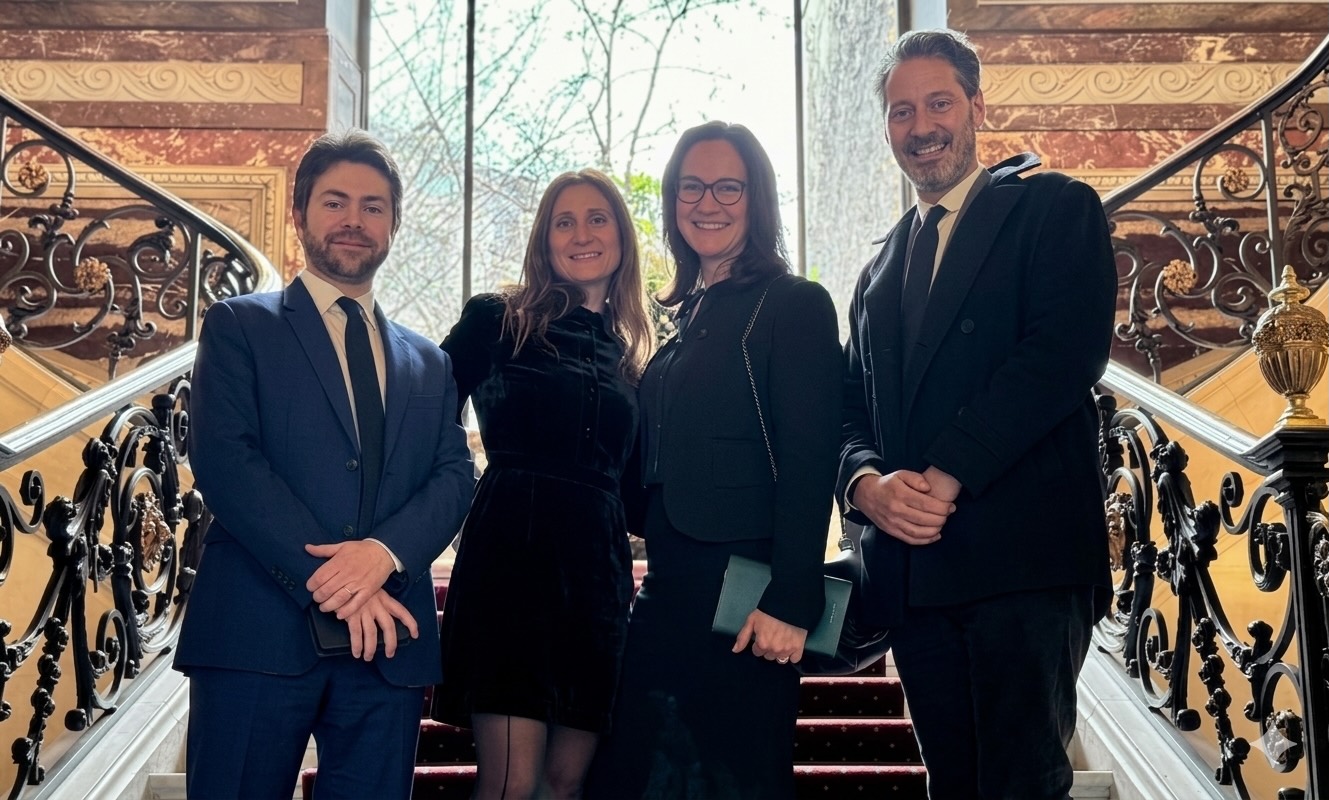
Technological innovation is no longer the only engine of the crypto ecosystem. Today, the debate has moved to the field of legal architecture and financial infrastructure control. This was the heart of the discussion moderated by Laure Pallez, Associate Director at Mascaret, and Estelle Monraisse (President Alter’Com Conseil and Senior Partner at Mascaret) at the conference organized by the Cercle France-Amériques on Monday, March 16, 2026.

The event, dedicated to interactions between “Banks, States, Citizens: who will shape the future of crypto?”, brought together a panel of experts recognized for a cross view between Europe and the United States on the issues of digital sovereignty: Sebastien Badault, Vice-President at Ledger and Stéphane Blemus, Financial Law Lawyer at White & Case.

The observation: irreversible integration

The era of experimentation is over. The question of the entry of digital assets into mainstream finance no longer arises: it is a reality. The current challenge lies in the definition of the rules of the game. The next chapter will not be written by technology alone, but by the interaction between private infrastructure, public sector involvement and regulatory credibility.


Three pillars of transformation identified:

  1. Stablecoins, vectors of influence: For Europe, the ability to develop and adopt local issuers and payment rails is an imperative of sovereignty in the face of a dollar-dominated market.
  2. Asset tokenization: More than a technical innovation, the programmability of financial assets represents a structural overhaul of capital markets, from issuance to asset service.
  3. The regulatory framework as a lever: If the MiCA regulation offers a basis, the leading jurisdictions will be those that will align law, liquidity and institutional adoption to create an ecosystem of sustainable trust.

Finance is emerging at the intersection of law, technology and market structure. For companies and decision-makers, reflection must now focus on the nature of the infrastructure used and the resulting strategic benefits.

Mascaret thanks the Cercle France-Amériques for the invitation to this reference event and its partners for the quality of the debates.

Discover More

Trump 2.0: why must Europe turn American uncertainty into a lever for its Deeptech?

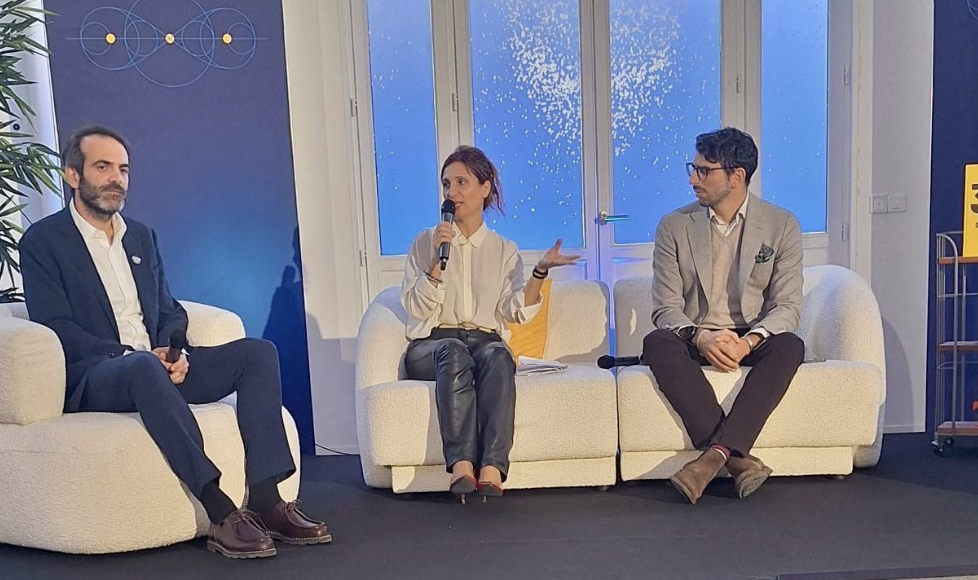
Donald Trump’s return to the White House and the upheavals that accompany it redefine the global technological balance. On the occasion of Deeptech Week, Laure Pallez, Managing Partner Mascaret, spoke at Bpifrance to analyze the consequences of this “American chaos” and the historic opportunities available to the European ecosystem.

Alongside Marco Riccardi (QuoIntelligence) and moderated by David Boujo (Bpifrance), the debate highlighted a paradox: American political instability could become the catalyst for European technological power. Where the United States risks fragmentation of its innovation strategies, Europe can offer a framework of trust, based on legal clarity and continuity of public policies.


Three strategic axes for the European ecosystem:

  1. Attractiveness of talent and capital: Uncertainty can promote a “brain gain” for Europe. To do this, our ecosystems need to simplify access to venture capital and strengthen bridges between research and industry.
  2. The imperative of strategic autonomy: Dependence on American infrastructure is a risk that Europe can no longer ignore. The development of a sovereign Deeptech (AI, cybersecurity, cloud infrastructures) is becoming a top priority for national security.
  3. The transition to the industrial scale: The challenge is no longer to create startups, but to build world leaders capable of competing in global markets while respecting European ethical and regulatory standards.

For Laure Pallez, “chaos is only a chance if we are ready to seize it”. European Deeptech must not simply wait for the storm to pass, but assert itself as the new foundation of global innovation: stable, sovereign and ambitious.

Mascaret supports Deeptech leaders and companies in their positioning and influence strategies within a complex geopolitical environment.

Discover More

When Mascaret speaks: a look back at several weeks of interventions

In recent weeks, Mascaret’s teams have multiplied interventions during strategic events. Back in images and analysis on these highlights, between media decryptions and field expertise. 🎙️


MediaConnect : 03 mars

In an interview with MediaConnect, Stéphanie Laurent was asked about a topic that was too little discussed: how to help your spokespersons better manage stress in front of journalists? Our associate director gives her expert advice in media training, an essential lever to transform apprehension into a communication opportunity. If you want to master media speaking and learn how to manage your stress in interviews, the video is available here.


LCI : 24 février

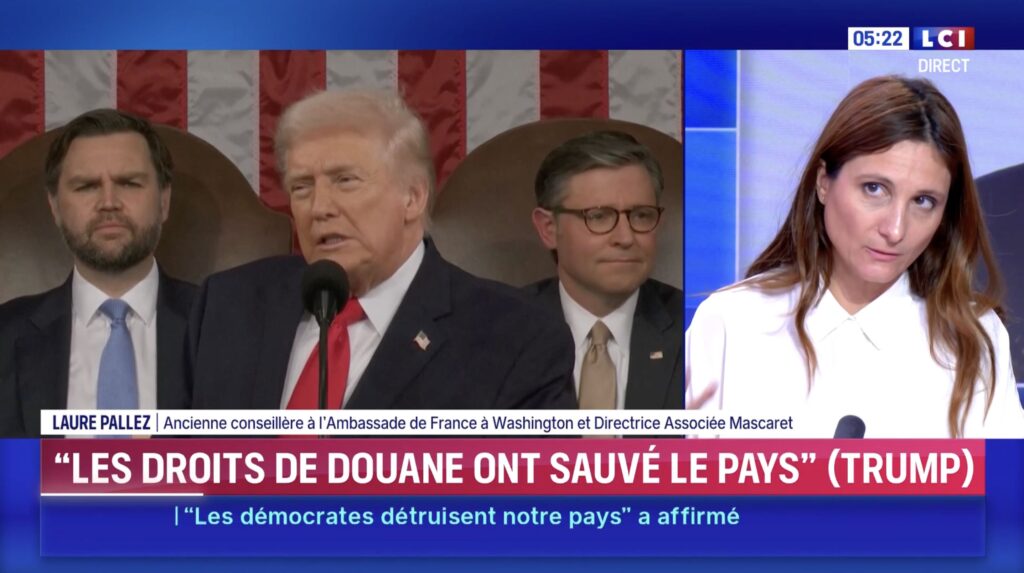
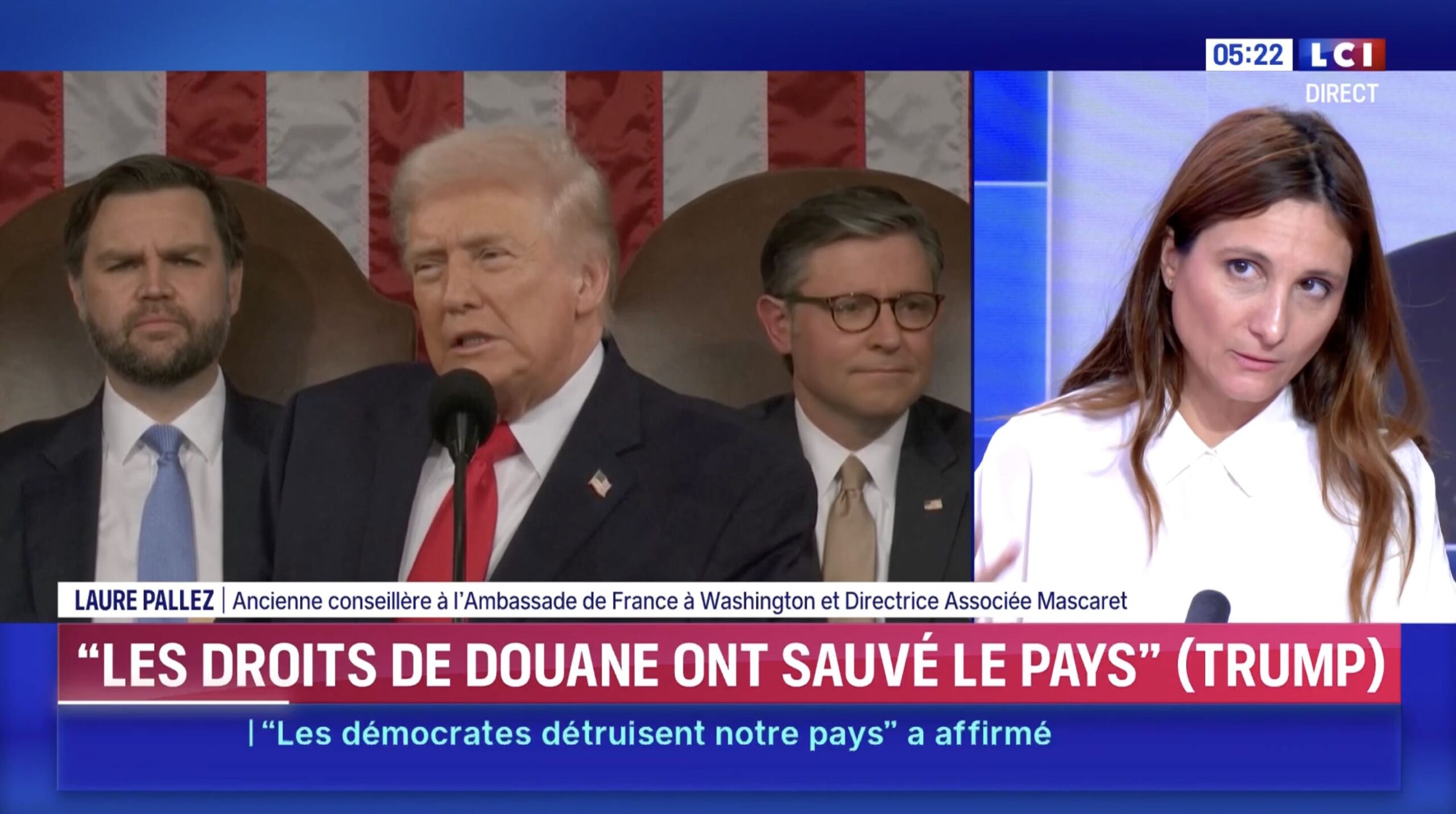
On the occasion of Donald Trump’s State of the Union 2026 speech, Laure Pallez (Senior Partner at Mascaret) spoke on LCI to analyze the substance and form of the presidential address. If the economy and immigration have dominated the debates, a strong signal has been sent: innovation must not be free from the protection of citizens. In the United States, concerns are growing in the face of the deregulation of AI and education. In particular, the energy impact of AI raises fears of a surge in bills, while real wages have only increased by 1% (source: Center for American Progress). By demanding that tech giants finance their own energy needs through the “Rate Pay Protection Pledge”, is Trump trying to bridge the growing gap between Silicon Valley and citizens?


Entrepreneur Invest : 20 février

During a morning dedicated to article 150-0 B ter of the CGI, Benjamin Grange (CEO of Mascaret) shared his expertise on growth financing and transformation trajectories. The objective, according to Entrepreneur Invest, was clear: to decipher the evolution of the latest finance law, measure its impacts and share good practices to secure re-employment operations. With a fundraising of €7 million from Entrepreneur Invest, Bpifrance and Société Générale, Mascaret was thus able to provide concrete testimony on the application of these devices in the service of business development.


Baromètre ACSEL : 19 février

Laure Pallez (Senior Partner) represented Mascaret at the Ministry of Economy during the presentation of the 13th edition of the Barometer of French confidence in digital, published by ACSEL. This 2026 vintage reveals a major turning point: if generative AI takes off, it simultaneously weakens the promises of digital. Between proliferation of fake news, algorithmic opacity of social networks and an increase in cyber scams, confidence is being tested. A rich and stimulating exchange, up to the challenges of regulation and transparency that await the actors in the sector.

Discover More

SPEECH OF THE UNION 2026: WHAT TO REMEMBER FROM DONALD TRUMP’S SPEECH?

🇺🇸 On the occasion of Donald Trump’s State of the Union speech for the year 2026, on Tuesday, February 24, 2026, Laure Pallez (Senior Partner Mascaret) spoke on the LCI set.


What is the state of the Union discourse? It is an annual event in the United States during which the President, here Donald Trump, presents his “program” for the current year before the legislative branch of the federal government and guests. The speech generally includes reports on the national budget, the economy, current affairs, the agenda, progress, achievements and priorities and legislative proposals of the President.

In summary: The economy and immigration dominated the discourse but Trump wanted to send a strong signal: innovation must not be at the expense of citizens. In the USA as elsewhere, concerns are growing around deregulation, especially on AI and education, where the demand for clear frameworks is pressing. The energy impact of AI fuels the fear of an increase in bills while real wages have only increased by 1% in the US according to the Center for American Progress. By demanding that tech giants finance their own energy needs, is the announcement of a “Rate Payer Protection Pledge” intended as a response to the widening gap between citizens and technology?


👉 If the economy and immigration have traditionally dominated the debates, Donald Trump has sent a strong signal: innovation must no longer be at the expense of the “average American”. In a context where concerns are growing in the face of deregulation considered risky, particularly in sensitive AI and education sectors, the need for clear and protective frameworks has become a major political priority to ease social tensions.

👉 This regulation is anchored in a fragile economic reality for American households. While real wages have increased by only 1% according to the Center for American Progress, the explosion in energy consumption linked to artificial intelligence weighs the threat of inflation in electricity bills. The contrast is striking between the record profits of tech giants and the stagnation of purchasing power, creating a fertile ground for popular resentment against modernity perceived as expensive and exclusive.

👉 In response, the announcement of the “Rate Payer Protection Pledge” tries to bridge the widening gap between Silicon Valley and the rest of the country. By requiring technology companies to finance their own energy infrastructure needs, the administration seeks to protect taxpayers’ wallets while empowering AI players. This measure is intended to be the symbol of a new social contract where the private sector must assume the externalities of its growth to ensure that the technological dream does not become a financial burden for the middle class.

Discover More